
Brandon Starks Built the Grocery Store His Neighborhood Was Never Given
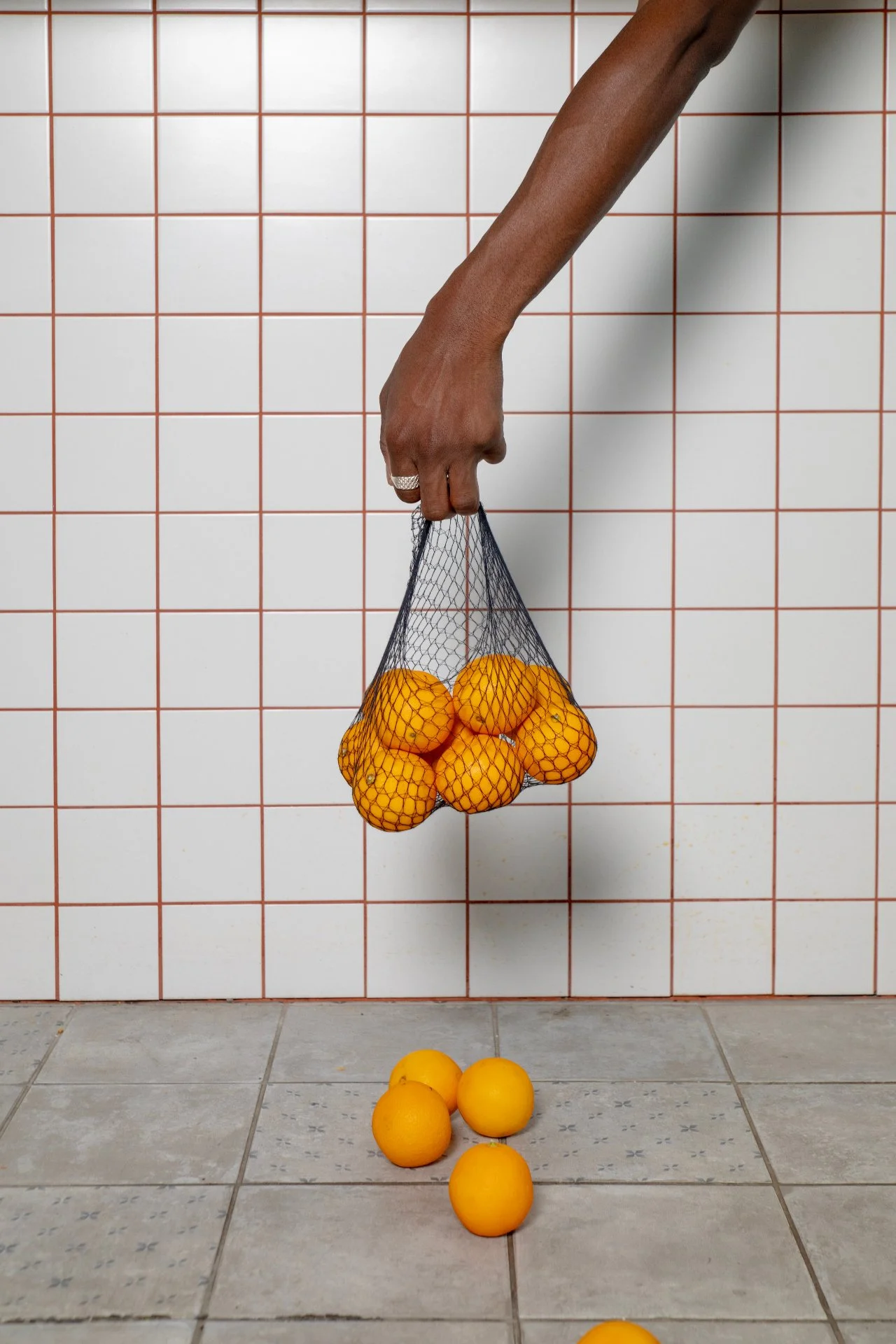
The phrase "food desert" gets used so often it's stopped meaning much of anything. It conjures an image: a neighborhood with no grocery store in sight, shelves that don't exist, a map with a red circle drawn around an absence. It's tidy. It's also, according to Brandon Starks, mostly wrong.
"A lot of the households we serve technically have grocery stores nearby," he says. "The issue is that the food available doesn't always meet their expectations." Not an absence, then. A mismatch, between what's on the shelf and what a family actually wants to eat.
Starks grew up in Prince George's County in what he describes as a solidly middle-class household. College-educated mother, a father with a good job, the kind of upbringing that, on paper, checked every box people associate with access. And yet, if his family wanted to shop somewhere like Whole Foods or The Fresh Market, they were driving to Annapolis, Bethesda, or Northern Virginia to do it.

"It wasn't because families in our community couldn't afford those stores," he says. "The stores simply weren't there."
Years later, working in community development for DC Mayor Vincent Gray's office, Starks watched the same pattern repeat at a larger scale. Black neighborhoods with homeowners, professionals, and real purchasing power, still passed over by the retailers that could have served them. It wasn't a supply problem, and it wasn't strictly an income problem either. It was something closer to a perception problem, companies deciding, without ever saying so out loud, which communities were worth investing in.
Then came the detail that reframed everything for him. When his family drove outside their neighborhood to shop at those stores, the cashier would ask for their ZIP code at checkout.
"They had the data," Starks says. "They knew where their customers were coming from. They just weren't necessarily bringing those resources back to the communities those customers lived in."
That's the gap The People's Market was built to close. What started in June 2022 as a farm-to-door subscription box, produce sourced from small local farms and delivered straight to customers' homes, has grown into something with far more moving parts. There's The Black Food Truck, a mobile farmers market sourcing exclusively from Black farmers. Produce distribution through Prince George's County Public Schools. Partnerships with churches, community organizations, and local chefs and caterers who need farm-fresh product they can trust.
None of it happened by simply deciding to source differently. Starks started by cold-calling farmers off a database called the Black Farmers Index, a skill set he credits to a background in campaigns and sales. What he wasn't prepared for was the capacity problem on the other end: small operations, limited labor, limited acreage, not enough hands to harvest, pack, and distribute at the scale a growing customer base demanded.
"Supporting Black farmers isn't just about saying, 'We want to buy from you,'" he says. "You also have to understand their capacity and figure out how your business can work within it."
That tension eventually forced him to rebuild the model he started with. His original vision was to source everything exclusively from Black farmers. Once real demand hit, the supply couldn't keep pace, so he widened the sourcing to include other small regional farms, while building The Black Food Truck specifically to stay fully committed to Black farmers where the volume made sense. "Entrepreneurship sometimes means being willing to let go of exactly how you thought something would work," he says, "without letting go of why you started doing it in the first place."
Ask him what success looks like five years out, and the answer isn't another store. It's a brick-and-mortar location that functions as the anchor of a neighborhood, built alongside housing, green space, a garden, places to sit and gather, not bolted onto a community after the fact, but designed into it from the start.
"I want people to be able to walk out of their homes and have fresh food, community, and green space right there," Starks says.
It's a vision that has less to do with groceries than it first appears to. Starks is careful about that distinction himself. Third spaces, he says, have always mattered to Black communities in particular, places to build businesses, exchange ideas, organize, laugh, and simply exist around one another, and much of that infrastructure has quietly disappeared.
"You might come in because you need collard greens, eggs, or some fruit," he says. "But maybe you stay because you see somebody you know. Maybe there's a garden outside, a community event happening, a chef doing a demonstration."
Food gets people through the door. What happens after that is the part he's actually building toward.
READ MORE ON ‘CIVIC’
September's theme is Food & Community, and it starts with the people who turn a table into a gathering place.